Lori Henriksen

author of The Winter Loon


5 Comments

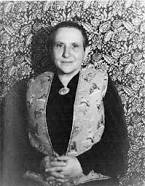
Gertrude Stein

G

Gertrude Stein ~ an icon of the 1930s

Gertrude Stein and her life partner, Alice B. Toklas, met and lived abroad. They toured the U.S. for 191 days during 1934 and 1935, while Ms. Stein gave a series of lectures. Out west the two were accepted as a couple. The Chicago Press referred to Alice as the wife or mate who protected Gertrude.

During her lectures, limited to only five hundred people, Gertrude Stein sat alone on the bare stage next to a table with a white cloth and a glass of water. She exuded a commanding presence. To some, her lectures sounded baffling. How could something that seemed so lacking of ideas be considered literary? But if one listened carefully to the rhythm of her speech, she could delight an audience as an innovative artist explaining English literature, using the relationship of one word to the next as her medium.

“Twenty-five years rolls around so quickly, but one hundred years do not roll around at all. They end, the century ends. What makes narrative difficult is a century begins and ends, but no part of it begins, and no part ends.” A Stein mind twister for sure.

According to the San Jose Mercury News in 2011, Wanda Corn, author of Seeing Gertrude Stein finds the focus on Gertrude Stein’s long-term domestic partnership with lover Alice B. Toklas timely, in light of the gay marriage issue today. “Here was a couple who really personified a long, monogamous relationship,” Corn says.

For more go to: www.gayheroes.com/gertrude.htm
Unknown-1.jpeg

Gertrude Stein

Thanks for stopping by.


7 Comments

Fairness

Fairness ~ Equitable, Honest, Upright, Honorable

Fairness is a continuation of Equality. Close, but somewhat different. To me, equality is a legal issue legislated by our elected government or the courts. Fairness is a social issue. Without it our society falls apart. We legislate equality, but fairness is a trait of a civilized society. Fairness is a close relative of the Golden Rule.

Many would say that what happened in the 1930s to women rodeo athletes  wasn’t fair. It’s the world Ruth, the protagonist in The Winter Loon finds herself when she leaves home at eighteen.

The challenge for a single woman to earn money often took inspiration and an adventurous spirit, life experience and a willingness to step out of her comfort zone. Inventive and flexible and even naive women such as Ruth discovered uncommon ways to survive.

cowgirl 2.jpg

Relaxing between rodeo events.

Popular throughout the Thirties, rodeo competitions offered cheap entertainment for small communities and provided an uncommon source of income for those able to compete on a rodeo circuit. Not many women qualified, but those willing to travel and endure harsh conditions could win substantial purses.

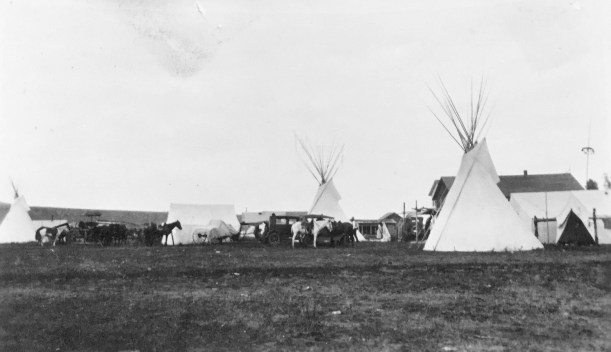
Rodeo tents.jpg

Rodeo performers often stayed in tents

Prior to 1930, Cowgirls had competed in all the same contests as men. Rodeo culture changed after a tragic 1929 accident at the Pendleton Roundup. A popular cowgirl, Bonnie McCarroll, was thrown and fatally trampled by the bronco she was riding. The Rodeo Association of America stepped in with a protective rather than an egalitarian rule to prohibit women from competing in what they considered dangerous—bronco riding, steer wrestling and roping contests—events with the highest purses. Some rodeo producers on small circuits ignored the regulations and allowed cowgirl events. Barrel racing, trick riding and relay races were the most common competitions for cowgirls.

By 1939, the singing cowboy, Gene Autry, took over most of the major rodeos and eliminated all women’s competitions except the sponsor-girl event of barrel racing.


7 Comments

Equality

E

Equality ~ Equal Rights, Civil Rights, Equal Opportunity,  Justice

During the Depression, Women who worked were criticized for taking jobs away from men. With sixty percent of people unemployed, only a minority of women worked outside the home. The Labor Secretary, Frances Perkins, encouraged a public stance of family unity, urging women to avoid paid work. “Don’t steal a job from a man,” became a popular slogan.

Despite public hostility, employers still hired women because they worked for lower wages—almost fifty percent of what men earned. Common jobs for women were clerical, factory work, and domestic service. Employed married women did double duty with a job and taking care of their home.

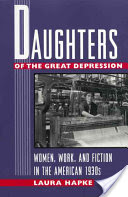
content.jpegAccording to Laura Hapke, writing in Daughters of the Great Depression (available on Amazon), married women were forbidden from government and other employment by a section of the Federal Economy Act. Women were also denied equal pay for equal work under the 1933 National Recovery Administration code (NRA). Even though women’s wages were higher by three percent by the mid-thirties, on average their wages were still only equal to about fifty percent of a man’s average wage. Legislation more often supported protective rather than egalitarian laws when it came to women’s rights.

The NRA of 1933 was one of the most important measures of FDR’s New Deal, enacted in his first one hundred days of office. Designed to reverse the economic collapse of the Great Depression, it succeeded only partially in its goals. The NRA was declared unconstitutional in 1935, less than three weeks before it would have expired.

We still struggle today as a nation to grant equality to all our citizens. I leave you with the words of Mahatma Gandhi:

1`

Thanks for stopping by.


9 Comments

Deception


D


Deception ~ Deceitful, misleading, specious

This topic chose me. I randomly opened Volume 1 of the Shorter Oxford English Dictionary to the D section and ran my finger down the page, opened my eyes and my finger had landed on Deception. I wasn’t happy with the negative impression I have of the word: underhanded, fraud, monkey business. I’ve been carrying this word around with me for a few days, wondering how it fits my theme.

In the Oxford American Writer’s Thesaurus I came across a challenge of how to describe a person who is said to be deceptively strong? I would describe Ruth, the main character in The Winter Loon as deceptively strong.

Ruth handles and rides horses like a pro. She competes in relay races, one of the most dangerous rodeo events of the era. After a few months on the rodeo circuit, she dresses as a cowboy and joins a steer wrestling team as a hazer. A hazer rides alongside an eight hundred plus pound steer to keep it running in a straight line for the bulldogger who in a few seconds wrestles the steer to the ground. It takes a lot of skill and guts, especially for a woman in a man’s world.

But Ruth has a softer, weaker side. She has trouble being assertive. Raised to believe she should marry and be cared for by her husband, Ruth conforms to her gender role. When she leaves home for the rodeo, she is a follower who must learn to stand up for herself. She let’s Mac, her cowboy sponsor who fronts the money push her around even though she earns high prize dollars. The underbelly of Ruth’s strength is her passivity.

There’s also a deceptively positive aspect to deception. It has a self-protective side for women in keeping their relationship hidden. The white lies about being spinsters, saying they live together to save money during the Great Depression were deceptive. The fact that the truth could result in persecution, losing everyone and everything dear, physical harm and even death, made deception advantageous. But it also took a toll on a person’s freedom to be authentic and relaxed with co-workers, with family and casual friends. The underbelly of living a self-protective life through deception is fear.

Eleanor Roosevelt was probably the best-known woman of the Thirties who lived a duplicitous life because of the woman she loved. I don’t use duplicitous in a pejorative way. She lived a secret life to protect herself and her husband and to keep from shocking her adoring public.

It wasn’t totally secret. In The Winter Loon Ruth and Gisela laugh over “lesbians in the White House” when Gertrude Stein and Alice B. Toklas have tea with Mrs. Roosevelt. According to the book, Loving Eleanor by Susan Wittig Albert, FDR took action to cover up Lorena Hickok’s relationship with his wife.

51WJ+z+3y8L._SX332_BO1,204,203,200_

It’s a great read about not only about the relationship between Lorena and Eleanor, but also about strong, professional women of the 1930s.

Thanks for stopping by.


6 Comments

Courage

C

Courage ~ Bravery, pluckiness, valour, fearlessness

Courage is an ability to participate fully in our heart’s longing and doesn’t necessarily always mean facing extreme danger without retreating. Courage can be our quiet inner self, moving us out of our comfort zone into a place of genuine desire. Courage takes a willingness to stick with and bear the uneasiness that can follow change.

What kind of courage did it take to leave home in the 1930s? Part of the backstory of my novel that landed on the cutting room floor is about Ruth’s struggle to break free of her family and society’s expectations that a young woman who graduated from high school in 1930 marry and start a family.

Ruth has a sweetheart, but wants something more. She sees her mother work hard, tending the house and garden, isolated unable to drive. She hears her mother say, Education is the key to the future. It’s the key to a woman’s independence.” But without the money to pay tuition, it’s an impossible dream. Her brother thinks her selfish to desert her mother. Her father encourages her to earn money until she marries.

Ruth has a job cleaning rooms in a hotel in Minneapolis. She earns about $7 per week, no sick days, no union. A dead end street of drudgery. No wonder she cooks up an idea with her cousin to join a rodeo, spending all day, everyday with her horse, Satin Dancer. She is spurred on by the potential of earning more money than she could ever make as a chambermaid.

Cowgirl

It took a good amount of pluckiness and true grit to join the rough and tumble male-dominated world of rodeo.

Bunkhouse

No more comforts of home.


17 Comments

Barriers

B

Barrier ~ obstacle, obstruction, stumbling block, impediment.

Before it was called The Winter Loon my novel was titled Barriers. All I could envision for the main characters, Ruth and Gisela, two young women who fall deeply in love, were barriers of all kinds. Ruth and Gisela lived in the Midwest and met each other in 1932.

In New York in the 1920s, queer culture flourished, but by the early thirties, a Broadway play with a lesbian theme opened and closed to biased reviews. The producer, director and players were hauled off to court and charged with obscenity. Bars and clubs closed down. It was the same in Chicago and elsewhere in U.S. cities.

The Depression era squashed the gay nightlife and excesses of the twenties. The avant-garde crowd became the target for those wanting to punish and blame. What had been tolerated became immoral and illegal by the mid 1930s. The 1934 Motion Picture Production Code banned all reference and depictions of gay or lesbian lifestyle from the movies.

Ruth and Gisela’s story isn’t about coming out of the closet. In the thirties there was no closet to come out of. It’s a story about the healing power of love. It’s a story about Ruth breaking down barriers—her own and those of society. It’s a story about a naive young woman searching for a life lived in authentic truth despite the obstacles.

For a short time a couple of years ago I had a friend in her late 90s. She passed away last year. I met her because she was featured on the front page of our local newspaper with fist raised and the caption, “Gay and proud.” The story was about the Gay Pride celebration for that year. It’s a small town. I looked up her phone number and called her, hoping to get first-hand information for my book.

It turned out we both loved jazz and going out to dinner and had many fun nights. She was open about her long-time relationship with the woman she loved and still mourned her recent death. I thought I would learn more about the barriers the two of them faced, the kind you can’t find in history books. I found out more about love than about obstacles. The two of them met in New York City. They ended up living a quiet life in upstate New York, running a B&B before traveling out West.

Perhaps The Winter Loon will remind a generation now fighting to keep marriage equality about how difficult it was before gay advocacy groups formed after the 1969 Stonewall Riots in Greenwich Village. Before Stonewall, there was almost nowhere to turn for information unless a person was lucky enough to meet a kindred spirit.

I’ve added a link to a PBS.org film about the Stonewall Riots which is riveting and enlightening about the struggle people faced leading up to the riots:

http://www.pbs.org/wgbh/americanexperience/films/stonewall/player/

You might have to copy and paste to view the film.

Thanks for stopping by.


27 Comments

Anecdotes

A

Anecdotes ~ Can be amusing or historical tales, urban myths or legends. There might be a fable, an allegory, a yarn about a character in my book.

During the 1920’s, the U.S. population let out a sigh of relief with the horror of WWI behind them. The automobile increased mobility.

Ruth on car

Radio and motion pictures started a new set of values. Hemlines rose. Loose and flowing clothing, colorful and free-spirited, ushered in the revolution of freedom in dress and morals. Women powdered their nose, rouged their cheeks and bobbed their hair. The Nineteenth Amendment passed giving women the right to vote. Corsets be damned. The archetypal female was now a flapper, not a suffragist.

The Twenties, full of crime and prohibition, introduced the blues and a casualness toward sexuality reflected in speakeasies and avant-garde society until the nonchalance of The Great Gatsby gave way to The Grapes of Wrath.

Hearts and minds closed as the U.S. in the Thirties turned away from a decade of optimism and entered the Great Depression. Hemlines dropped to mid-calf or just above the ankles. More modest, form-fitting styles with high necklines and wide shoulders were designed to enhance the often-elusive tall and slender look of the “ideal” Thirties woman. Surprisingly, during the hard economic times, cosmetic sales doubled.

The 1930s saw the tenth anniversary of Women’s Suffrage, but not equality. Women remained under represented in positions of political power. With a growing number of college graduates, women with degrees were often overlooked in business and academia.

Ada Comstock was the first Dean of Women at the University of Minnesota in 1907 and later President at Radcliffe until 1943. She reminisced in a 1940 speech about her early days as a Dean when, the efforts of women seeking higher education was still regarded more or less as a humorous thing, and an occasion for jokes.

The controversy over women attending college created a dilemma in an era where the proper role would have been marriage and children. Some folks believed that college-educated women made better wives. Almost always totally dependent on their husbands, an educated woman was thought to better complement a man as he progressed in his profession. Others felt that educated women were less likely to marry and would have difficulty supporting themselves with their education. The majority of women seeking to broaden their horizon turned to traditional professions in education, nursing or home economics.

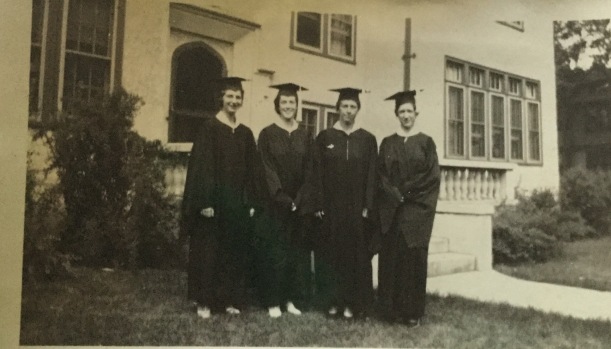
graduates

Women who wanted to heed the motto of Smith College: Education is the key to the future, needed gumption. She needed moral support. She needed money.

Ruth and Gisela, characters in my novel The Winter Loon, meet at the University of Minnesota in 1932. Ruth pays her tuition with money she earns as a cowgirl on a traveling rodeo circuit.


18 Comments

A to Z Blog Challenge Reveal

atoz-theme-reveal-2016 v2.jpg


Drumroll please. . . I accept the 2016 A to Z Blog Challenge. It’s my kick in the pants to get this blog off to a high-spirited start. A post every day in April, except Sunday. That’s twenty-six posts, one for every letter in the alphabet. That’s the challenge. Read more about it and the over one thousand bloggers taking part in the fun:

http://a-to-zchallenge.com

There’s a blog for every taste and still ten days to sign up.

My theme is Women in the 1930s. My characters in THE WINTER LOON live in the turmoil of the Thirties. I’ll be writing about issues affecting women in that era. Women who stepped outside the norm. Cowgirls. Women at university and women working during the Great Depression. Women defying the social expectation that they marry, become housewives and mothers. THE WINTER LOON is about the healing power of love and the barriers two women in love face in their everyday life. My theme will embrace all these issues.

Juno

You’re gonna do what?


Leave a comment

Choices

Word of the day ~ regenerate. The Oxford American Writer’s Thesaurus says revise, revitalize, renew, breathe new life into. I’ve chosen this word because I’ve spent way too much time in the last few days trying to breathe new life the appearance of my blog site. Thanks to my website advisor, Maggie McLaughlin, changes are happening.

Perhaps the word should have been choices. So many choices in designing a website. So many choices in life.

My main character in THE WINTER LOON, Ruth Thompson, makes a choice early in her life based on what she doesn’t want. She questions the values she has been raised with and society’s expectations for young women in the 1930s. Her choice opens the door to a whole new life. Along the way there are many changes. Many times she must renew the direction of her life in order to follow her heart.

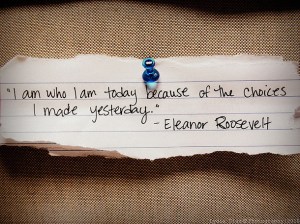
Still reading LOVING ELEANOR. I can’t help believing that Eleanor Roosevelt was the first blogger with her My Day daily newspaper column that ran in almost one hundred newspapers. Her choice to write the column took away from precious time she could spend with Lorena Hickok, the woman she loved. It was Lorena’s choice to suggest the column and to encourage her writing success that caused the whole world to fall in love with Eleanor.

Favim.com-cute-eleanor-roosevelt-quote-writing-134282


Leave a comment

Rambling Thoughts

Word of the day – Halidom – picked out of the Scrabble Dictionary at random. Feeling lazy I look up halidom on thesauraus.com. It’s not an accepted word and the computer corrects me to halidade, which also has no synonyms. Thesauraus.com wants to know if I mean haloed—close, but not quite. Still too lazy to lift the heavy two volume Oxford Dictionary, I look up halidom on dictionary.com. Aha. It means a holy place, a church or sanctuary.

The British Dictionary describes halidom as an archaic noun. In 1906, L. Frank Baum used halidom like this: “By my halidom, churl—” He stopped to glance at the fat man. Perhaps it would make more sense in context. It’s from a book called JOHN DOUGH AND THE CHERUB. By the way, L. Frank Baum also wrote THE WONDERFUL WIZARD OF OZ.

Anyone interested in either of these two books can read them for free on Gutenberg.org. If neither of these is of interest, there are 51,341 other free eBooks on the site. Amazing where an unfamiliar word has taken me.

Blue and I dashed out between storms to walk through our halidom of trees today. Water droplets glittering on pine needles in weak sun, drenched us as the Ponderosas bow in the stiff breeze. A holy experience indeed to be out

I’m reading LOVING ELEANOR by Susan Wittig Albert. This historical novel tells the fascinating and endearing story of Eleanor Roosevelt and Lorena Hickok, an AP journalist in the 1930s. Since writing THE WINTER LOON, I’ve become fascinated with the 1930s history and its impact on women. More about Loving Eleanor and women in the 1930s as my blog develops.